The Bucegi Mountains, above Bușteni
A massif of forest, cliff and open plateau in the Southern Carpathians, protected as Bucegi Natural Park since 1990.
Geography
A massif shaped by wind, water and limestone
The Bucegi Mountains form a roughly square plateau, ringed by steep cliffs on the eastern side that drop straight down to Bușteni and the Prahova Valley. The highest point, Omu Peak, reaches 2,505 meters. The eastern wall, the one visible from town, is where most of the well-known trails and cable car routes climb.
Millions of years of wind and water erosion have shaped the sandstone and conglomerate rock of the upper plateau into isolated formations, the best known being the Sphinx and Babele, both reachable by cable car or on foot from Bușteni.
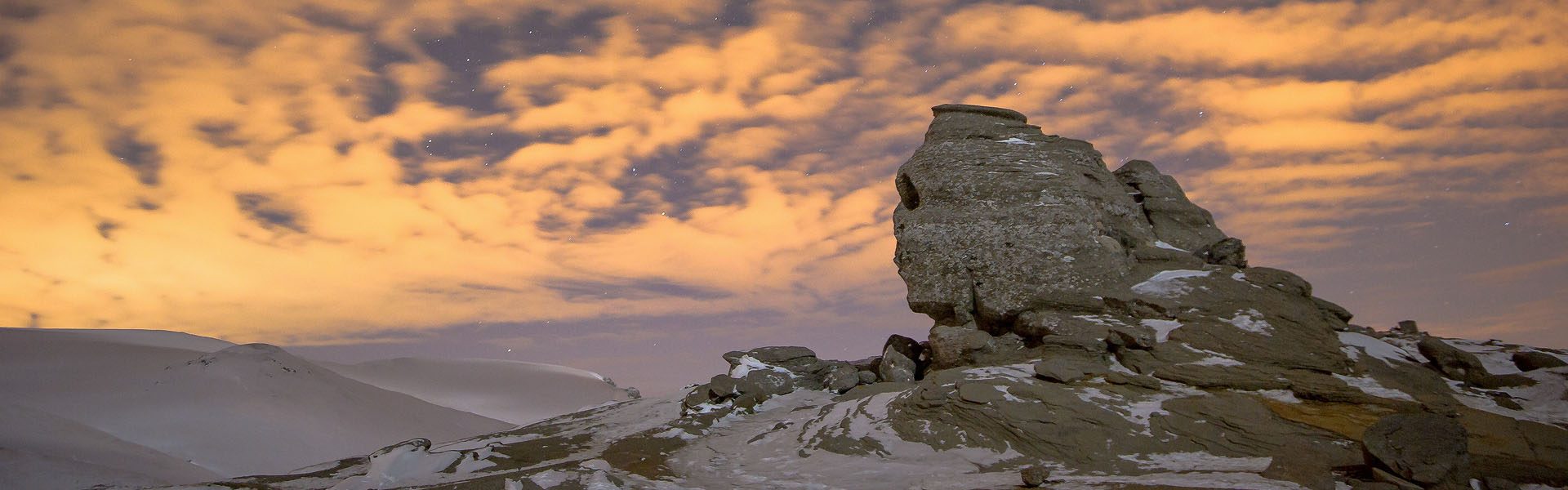
The Sphinx, a wind-carved rock formation on the Bucegi plateau.
Forest
From spruce woodland to bare alpine rock
Beech and mixed forest
The lower slopes around Bușteni are covered in beech and mixed deciduous forest, with dense undergrowth and the richest wildlife of the massif.
Norway spruce forest
Most trails from Bușteni climb through spruce forest, cool and shaded, with the trees thinning as the trail approaches the tree line.
Dwarf pine and alpine meadow
Above the forest line, low dwarf pine gives way to open alpine grassland on the plateau itself, exposed to wind year round.
Wildlife
What lives in the Bucegi massif
Brown bear, red deer, wild boar
The forest zone holds a resident brown bear population along with red deer, roe deer and wild boar, mostly active at dawn and dusk, away from marked trails.
Carpathian chamois
Chamois live on the steep rock faces and higher ridgelines, often visible from a distance on the cliffs above Bușteni in clear weather.
Golden eagle and peregrine falcon
The cliffs and plateau are hunting ground for golden eagle, peregrine falcon and other raptors that nest on the exposed rock.
Alpine marmot, viper, salamander
The upper meadows and rocky ground support alpine marmot, the venomous common European adder and fire salamander in damper forest areas.
Your base for the massif
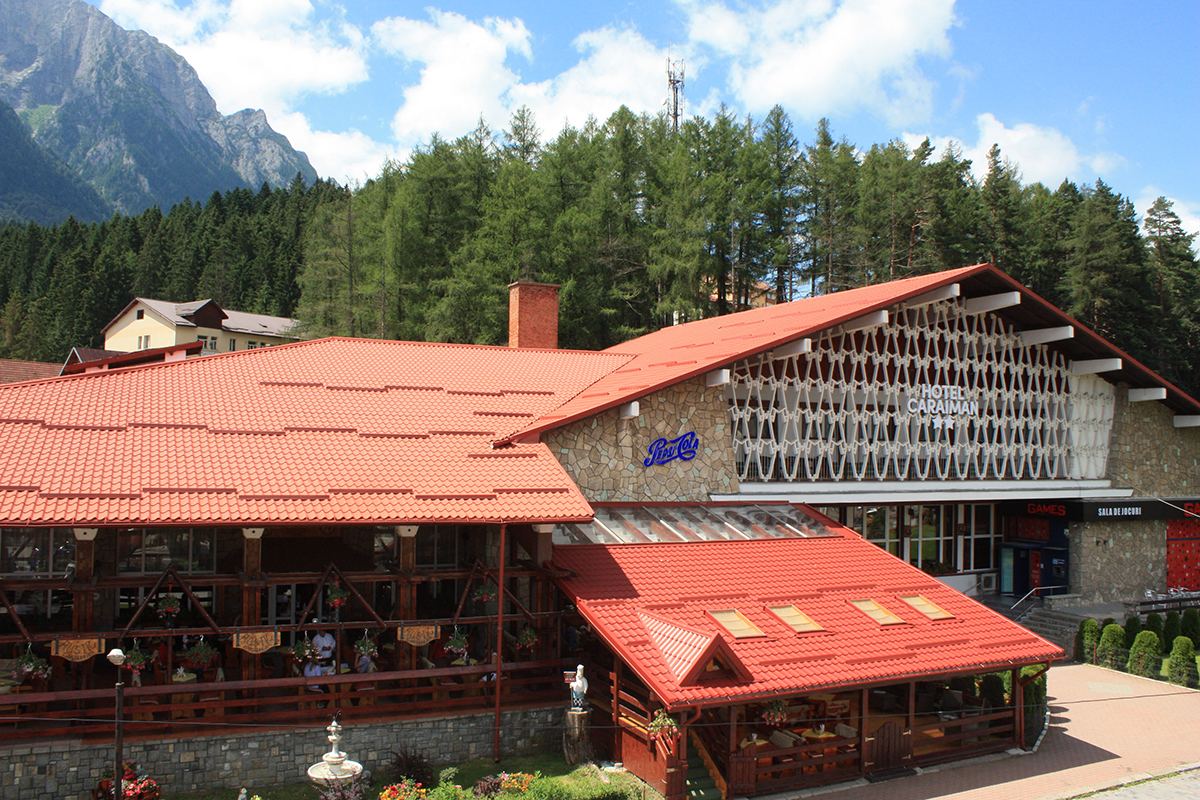
Complex Caraiman, at the foot of the mountain
We're two minutes from Bușteni station and a short walk from the cable car station, the gateway to everything described on this page.
Flora
Plant life, including species found nowhere else
Edelweiss
Edelweiss grows on rocky outcrops above the tree line and is strictly protected, picking it is prohibited inside the park.
Local alpine species
The isolated plateau habitat has produced a handful of plant species and subspecies found only in the Bucegi Mountains, the subject of ongoing botanical research.
Summer wildflowers
From June to August the alpine meadows fill with gentian, alpine poppy and mountain arnica among other wildflowers.
Visiting responsibly
Bucegi Natural Park, a protected area
Bucegi has been a protected natural area since 1990 and includes several strict scientific reserves. Stay on marked trails, carry out any waste, keep dogs on a lead, and do not pick plants or approach wildlife. Weather on the plateau changes quickly, even in summer, so check conditions before heading above the tree line.
See the massif for yourself
Marked trails, distances and estimated times from Bușteni, all reachable on foot or by cable car.